I’ll be upfront: I didn’t think I’d need to write a glossary entry for “AI content transparency” a year ago. But here we are. If you publish anything online in 2026, you’ve probably noticed the question changed. It used to be “is this content good?” Now it’s “who actually wrote it — a person, a bot, or some messy combination of both?”
That second question is what AI content transparency is really about. And it’s stopped being a courtesy. It’s law now, in several places, with actual fines attached.
So let’s get into it — what the term means, what the rules currently say, and how to stay compliant without turning your blog into a wall of disclaimers.
What AI Content Transparency Actually Means
Strip away the legal jargon and it’s a simple idea: tell people when AI helped make something. Text, images, audio, video — doesn’t matter the format. If a machine had a meaningful hand in it, the audience deserves to know.
Three things usually need to be true for transparency to actually count as transparency:
Did AI create or substantially shape the piece? Who’s responsible for it — a person, a brand, a system? And can someone actually verify that, through a label or some metadata baked into the file, rather than just taking your word for it?
A few years back this was mostly a trust exercise. Now it’s regulatory, and the regulations are oddly specific.
Why This Blew Up So Fast
The EU Moved First, and Moved Specifically
On 20 July 2026, the European Commission published finalised guidelines on Article 50 of the EU AI Act, and together with the Code of Practice on Transparency of AI-Generated Content, the Guidelines complete the Commission’s guidance framework for the Article 50 AI Act transparency obligations which broadly take effect from 2 August 2026. The principle underneath it is almost refreshingly simple — Article 50 requires transparency about AI — it does not restrict what AI can be used for.
What caught my attention reading the actual guidance wasn’t the broad strokes — it was how picky they got about where a disclosure needs to live. The Commission was blunt about it: information must be perceivable in practice, so it cannot be buried in terms or menus, and a single up-front notice may not suffice where people may not see the start of the content, such as on a podcast or video. Translation: stuffing a disclaimer in your footer doesn’t count anymore.
There’s a technical layer, too, that most bloggers never think about until it bites them. Providers of AI systems generating synthetic audio, image, video, or text are required to make their outputs detectable, and under the current state of the art, at least two layers — metadata plus watermark — are mandatory for content disseminated online. If you’re using AI-generated images and even a slice of your readers are in the EU, that’s not someone else’s problem anymore.
One bit of good news, though: you’re not retroactively on the hook. The guidelines confirm content generated prior to 2 August 2026 does not need to be retroactively marked — so your back catalog is safe. Just what you publish going forward.
California Went After the Tool Makers Instead
California took a different route — rather than regulating every publisher, it went straight for the AI companies. The California AI Transparency Act requires covered generative-AI providers whose systems have more than 1,000,000 monthly visitors or users and are publicly accessible in California to offer a free AI-detection tool and label AI-generated image, video, and audio content, with a civil penalty of $5,000 per violation and each day treated as a discrete violation.
Worth flagging, because a lot of sites still get this wrong: California’s SB 942 AI Transparency Act took effect August 2, 2026 — not the January 1, 2026 date still cited across much of the web — after AB 853 delayed it to align with the EU AI Act. And here’s the part that actually matters if you’re a text-first blogger — the watermarking and disclosure obligations apply to images, video and audio, not to text-only outputs. So SB 942 isn’t really pointed at you. It’s pointed at the tools behind you.
There are two disclosure layers in the law, and they work differently. Providers must offer users the option to include a manifest disclosure identifying covered content as AI-generated, and the disclosure must be clear, conspicuous, suitable for the medium, understandable to a reasonable person. Underneath that sits a quieter, technical layer — the latent disclosure must include the provider’s name, the name and version of the generative AI system, the timestamp of creation, and a unique identifier.
And It’s Not Just These Two
Honestly, keeping up with every jurisdiction’s AI labeling law has become a small job in itself. The EU and California are just the two with the most paper trail right now — other regions are moving on similar frameworks, some faster than others. But the direction is the same everywhere: governments want AI involvement visible, not assumed, and they’re backing that up with penalties instead of polite suggestions.
Checker, Detector, or Detection Tool — Does It Matter Which One You Use?
People use these three terms like they’re the same thing. They’re close cousins, not twins.
An AI content checker tends to be the broader option — it looks at your writing for signs of AI involvement, often bundled with grammar or readability scoring. Less of a verdict, more of a gut-check.
An AI content detector is usually narrower — it spits out a probability, something like “this reads as mostly AI-generated,” based on patterns like sentence predictability and repetitive structure that language models tend to leave behind.
An AI detection tool is the umbrella term, and under California’s law, it’s not just a marketing phrase — it has teeth. Covered providers must build one that works on images, audio, and video — a free, publicly accessible tool that lets anyone check whether a piece of image, video or audio content was created or altered by their system.
None of these are bulletproof, though, and I’d be lying if I said otherwise. Detectors flag heavily-edited human writing as AI all the time, and they miss AI text that’s had even a light human pass. Which is exactly why disclosure — not detector accuracy — needs to be the thing you actually lean on.
Is a Free Checker Good Enough?
If you’re running a blog solo, or with a small team, probably yes — at least to start. An AI content checker free plan gives you a quick sanity check before hitting publish, without committing budget you might not have.
But free tiers come with real ceilings. Smaller word caps per scan. Less reliable scoring once human and AI writing get mixed in the same draft. No CMS integration, so you’re copy-pasting constantly. No history to track your AI ratio over time, across your whole content library.
If you’re putting out a handful of posts a month, free works fine. Once you’ve got multiple writers leaning on AI drafts and an actual editorial calendar, you’ll outgrow it — and that’s a normal, good sign, not a failure.
The Rules That Actually Affect Most Bloggers
Cutting through the legal phrasing, here’s what you genuinely need to do:
Put the disclosure somewhere people will actually see it. Not buried in your terms page — near the headline, in the byline, somewhere a reader hits before they start reading, not after they’ve already left.
Keep AI disclosure and sponsorship disclosure separate. If something is both AI-assisted and sponsored, your reader needs both pieces of information clearly, not blended into one vague line.
Know when your visuals need machine-readable marking. If you’re using AI-generated images and any slice of your audience sits in the EU, Article 50(2) reaches you through the tool you used, even if you’ve never read the regulation yourself.
Realistic synthetic media gets watched more closely than plain text. A deepfake-style video or an AI voiceover sits under tighter rules than a blog post that was AI-drafted and then edited by an actual human.
And expect free detection tools to become standard rather than a nice feature. California already mandates it from large providers. That’s usually how these things go — what’s required of the big players eventually becomes the norm everyone copies.
Keeping This From Wrecking Your Workflow
None of this means ditching AI tools. It just means building a few habits in.
Treat disclosure like a checklist item, the same way you’d treat a fact-check or an SEO pass — not something you scramble to bolt on the night before publishing. A single line like “Drafted with AI assistance, edited by [name]” takes ten seconds and covers most of what’s actually being asked.
Run your draft through an AI content checker while you’re still editing, not after it’s live. That’s when you can catch the tells — the repetitive sentence openers, the generic transitions, that oddly even paragraph rhythm AI writing tends to fall into — and actually fix them while you remember what you meant to say.
Don’t bet everything on one detector’s score. AI content detector accuracy swings a lot between tools, and if two of them disagree on the same piece, that’s not a glitch — it’s a cue to trust your own judgment and probably disclose anyway, just to be safe.
Keep a log, even an informal one. Which tool, for which part of the process — outline, draft, edit — and who did the human review. If a platform or regulator ever asks, you’ll have an answer instead of a scramble. AI Content Transparency builds long-term loyalty better than hiding your methods.
And honestly, the best practice on this whole list is just editing for voice. The less a piece sounds AI-generated, the less your disclosure feels like a confession and the more it feels like a footnote. Vary your sentence length. Cut the filler phrases. Throw in an actual opinion, or a specific detail a model wouldn’t think to invent. It brings your AI ratio down without you even trying that hard.
Match your wording to where your readers actually live, too. A global audience means more than one rulebook applies. “AI-generated content” or “Created with AI assistance” tends to satisfy most frameworks. Something vague like “some content may be machine-assisted” usually doesn’t hold up if anyone bothers to check. SEO experts say AI Content Transparency may soon influence search rankings.
Picking a Detection Tool Worth Your Time
A few things worth checking before you commit to one:
Does it actually explain its methodology, or just hand you a percentage and nothing else? Does it point to the specific paragraph that reads as robotic, or just score the whole piece as one number? Does it give credit when AI-drafted text has been meaningfully rewritten by a person, instead of treating all AI-touched writing the same?
Does it plug into your actual workflow — CMS, Google Docs — or are you stuck copy-pasting forever? And what happens to the price once you outgrow the free tier? Without AI Content Transparency, your site risks being flagged as low quality.
An AI content checker free plan is great for testing the waters. Just know the jump before you build your whole process around it.
Where Claude SEO Comes In
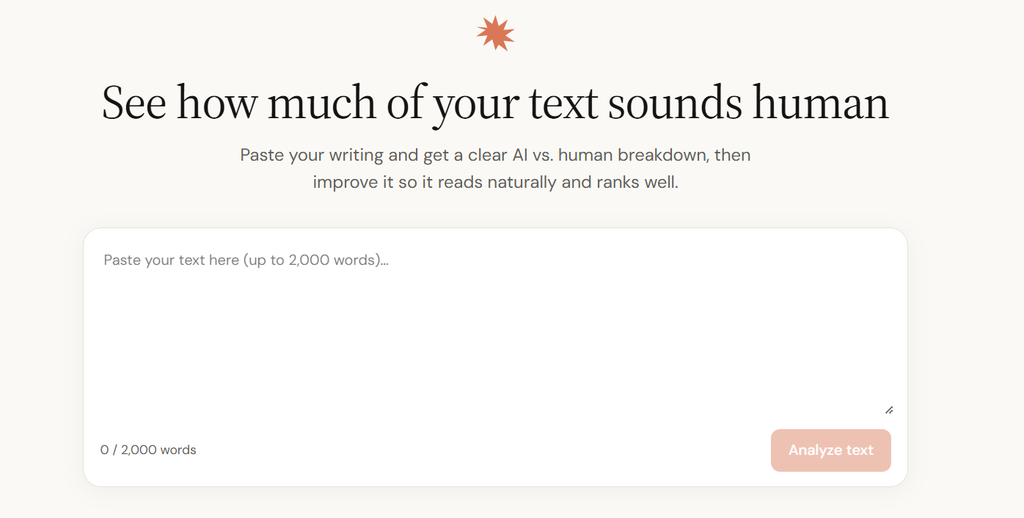
This is pretty much the gap Claude SEO exists to close. Instead of handing you a scary number and walking away, it measures your content’s AI ratio and shows you where, specifically, it reads as machine-made versus human-written.
Practically, that means you can check your ratio before publishing instead of after a reader notices something’s off. You can pinpoint the exact paragraphs that need a human rewrite. You can use AI for speed without losing your own voice in the process. And you can fold AI content transparency into your actual editing routine, instead of bolting it on at the last second.
It’s not just another AI content detector that spits out a score and disappears. It’s built to help you act on that score — refining the draft until it actually reflects a human-AI balance, instead of a red flag waiting to happen. Many brands now publish an official AI Content Transparency policy on their about page.
A Few Quick Answers
Do I legally have to disclose AI use everywhere? Not universally, but the direction is clear. The EU’s Article 50 rules and California’s SB 942 are the two most developed frameworks right now, and more regions are drafting similar ones. Safest bet in 2026: assume disclosure is expected, then check specifics for wherever your readers actually are. AI Content Transparency helps distinguish human-edited content from raw AI output.
Will I get fined for skipping it? Depends on your role. SB 942 penalties carry a civil penalty of $5,000 per violation, with each day treated as a discrete violation — though that’s aimed at large AI providers, not individual bloggers. The EU’s rules reach more broadly across providers and deployers, so your actual exposure depends on specifics worth checking rather than assuming.
Does a free checker protect me legally on its own? No, not really. It tells you your AI ratio. It doesn’t fulfill a disclosure requirement by itself. Use it to inform your editing, then disclose clearly regardless of what the score says.
What’s the least painful way to stay compliant? Run drafts through an AI content checker while editing, add a simple disclosure line before publishing, and keep a basic log of what used AI help. That covers most of what’s actually being asked, without turning your workflow into extra paperwork. The rise of detectors like WasItAI makes AI Content Transparency even more important.
Last Thought
This isn’t a trend that’s going to quietly fade — it’s getting written into law, platform policy, and plain old reader expectation, all at once. Writers and teams who build disclosure into their process now, and who actually use a decent checker or detection tool to catch rough edges early, are going to have a far easier time than the ones scrambling to catch up once enforcement tightens further.
None of this means giving up on AI tools. It means using them honestly, editing them with care, and being straight with your readers about how the piece actually came together. That’s really all AI content transparency is asking for.